
What a topical magnesium gel can and can't do for a painful knee
These gels are everywhere at the moment, and the marketing around them has got well ahead of the evidence. Here is a plain account of what is in them, what they plausibly do, and where the claims stop being defensible.
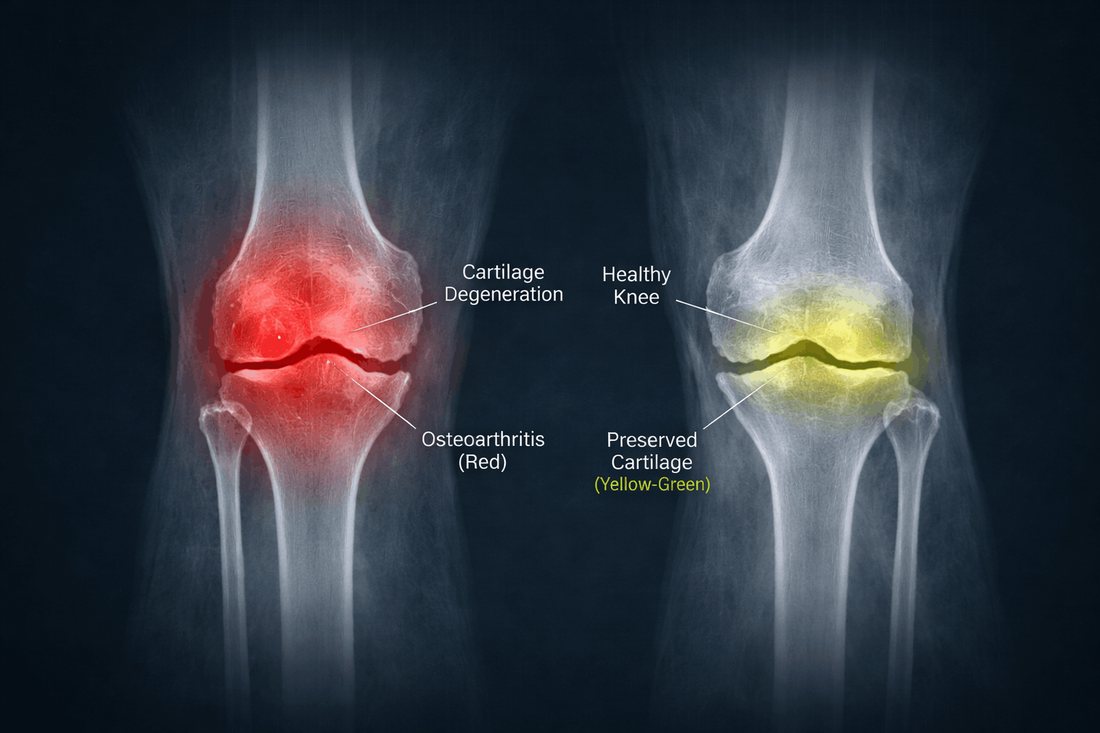
Read this part first. Knee pain has many causes, and several of them get worse if you manage them with a topical product instead of getting them looked at. Persistent pain, swelling, locking, giving way, pain after an injury, redness with fever, or pain that wakes you at night are all reasons to see a doctor rather than a website. Nothing on this page is medical advice, and no gel treats or reverses osteoarthritis.
Why these products got popular
The honest answer is that the alternatives are all unattractive in some way.
Oral anti-inflammatories work, and they also irritate the stomach and are not recommended long-term for a lot of people. Injections help some people for some months. Replacement surgery is major, effective, and something most people would rather postpone.

So a cream you rub on has obvious appeal: no stomach, no needle, no theatre. That appeal is exactly why the claims around this category have inflated so far.
What is actually in them
Magnesium (usually chloride)
Magnesium is essential and genuinely involved in muscle and nerve function. Applied to skin, the evidence that meaningful amounts cross into deeper tissue is weak — the skin is a good barrier, and the studies that exist are small and inconsistent.
What people often report is that magnesium sprays and gels help with muscle tightness and cramp. That is a plausible and modest claim. "Reaches your joint" is not a claim I would accept without much better data.
Menthol
This one is not in dispute. Menthol activates cold receptors in the skin and produces genuine, measurable, short-term pain relief through counter-irritation. It is why it feels like something is happening within a minute.
It is symptomatic and temporary. It does nothing to the joint underneath.
MSM, glucosamine, arnica and similar
Common additions with mixed-to-weak evidence topically. Arnica has some support for bruising. Oral glucosamine has been studied extensively for knee osteoarthritis with largely disappointing results; applied to skin, there is less reason to expect more.
The menthol is doing most of the work you feel. That is worth knowing before you pay for the rest of the label.
So is it worth using?
Reasonable to try
- Short-term symptomatic relief, especially before or after activity
- Muscle tightness around the joint
- Alongside — not instead of — exercise and strengthening
- When oral anti-inflammatories are unsuitable for you
- As a low-risk thing to try before escalating
Not reasonable to expect
- Cartilage regrowth or joint repair
- Treating or reversing osteoarthritis
- A substitute for assessment, physio or surgery
- Relief lasting beyond a few hours per application
- Anything at all if the real problem is elsewhere

The thing that actually has the strongest evidence
It is not a cream, and it is annoying, and it is exercise.
Progressive strengthening of the muscles around the knee — quadriceps in particular — has better and more consistent evidence for pain and function in knee osteoarthritis than any topical product on the market. So does losing weight where that is relevant, because of the load multiple through the joint.

Where a topical fits sensibly is as an adjunct: something that takes the edge off enough that you can do the exercises, rather than something that replaces them.
How to use one without wasting money
- Check the menthol percentage. It is the ingredient most likely to be doing what you feel.
- Apply to clean, dry skin and wash your hands afterwards — menthol in the eyes is memorable.
- Do not use under an occlusive dressing or a heat pack. This can cause burns and there are documented cases.
- Never on broken skin or over a rash.
- Give it two weeks. If nothing has changed by then, it is not going to.
- Tell your doctor you are using it, especially alongside other anti-inflammatories.

The bottom line
A magnesium and menthol gel is a cheap, low-risk, short-acting symptomatic product. Used with that expectation, plenty of people find it useful and there is no strong reason not to try one.
Used as a reason to postpone getting a painful knee looked at, it is actively a bad idea — and that is the part the marketing in this category tends to leave out.
The product this page is sponsored by
Topical magnesium & menthol gel
Read the full ingredient panel and directions on the product page before ordering.
View product detailsNot a medicine. Not a treatment for arthritis. Speak to your doctor about persistent joint pain.
Further reading
- Cochrane reviews of topical rubefacients and counter-irritants for acute and chronic musculoskeletal pain.
- NICE guideline NG226 — osteoarthritis in over 16s: diagnosis and management (exercise as core treatment).
- Reviews of transdermal magnesium absorption and the limits of the current evidence base.
- Case reports of chemical burns associated with menthol/methyl salicylate topicals used with heat.
Citations indicate the general literature and are provided as background. This page is promotional content, not a clinical review.